Exploring the Rich World of Mahjong
Unraveling the Origins of Mahjong
Mahjong is an ancient Chinese game that has captured the fascination of players all around the world. With its intricate tiles, complex strategies, and deep cultural roots, Mahjong is not just a game but a powerful social and cultural phenomenon. The game's origins are steeped in history, thought to have evolved during the Qing Dynasty, although its exact beginnings remain shrouded in mystery. Some theories suggest that Mahjong was derived from ancient card games, while others propose it was inspired by dominoes or other tile-based games.
The Structure of the Game
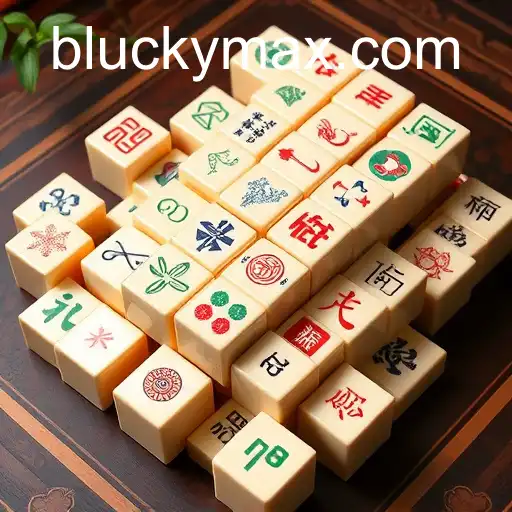
At its core, Mahjong is a game that involves skill, strategy, and calculation, with a dash of luck. The game is typically played by four players and involves a set of 144 tiles based on Chinese characters and symbols. These tiles are divided into various suits and honors, including bamboos, characters, and circles, along with wind, dragon, and flower tiles.
The objective of the game is to build a winning hand by either drawing or claiming tiles to form specific sets and pairs. Each game of Mahjong is divided into rounds, where players take turns drawing and discarding tiles to complete their hands. The game culminates when a player forms a legal winning hand, known as "Mahjong," and declares victory.jl998
Understanding the Role of 'Blucky' in Mahjong
In the realm of Mahjong, players often refer to a concept known as "blucky." This intriguing term combines the words "bad" and "lucky," describing a peculiar phenomenon where players experience a balance of fortunes and misfortunes during gameplay. The concept of "blucky" suggests that even when a player encounters a streak of bad luck, their fortunes might soon take a turn for the better due to the game's inherent balance.jilihost
Many seasoned Mahjong players believe in the power of "blucky" and rely on it as part of their strategy. This concept is deeply rooted in the cultural and philosophical aspects of the game, where balance and duality play a significant role. As players navigate through triumphs and challenges, the idea of "blucky" provides a comforting assurance that luck may eventually favor them.ll777ph
The Rules and Gameplay Mechanics
The rules of Mahjong can vary significantly depending on regional variations, with popular versions including Chinese, Hong Kong, Japanese, American, and more. Despite the variations, the basic mechanics of drawing and discarding tiles remain consistent.
In a typical game, each player starts with 13 tiles. On their turn, they draw a tile from the wall and then discard one, maintaining a hand of 13 tiles throughout. When a player forms a winning hand composed of four sets and a pair, they shout "Mahjong," ending the round. The sets can be either "Pong" (three identical tiles) or "Chow" (a sequence of three consecutive tiles in the same suit). Additionally, some versions allow players to form "Kong" (four identical tiles).
Scoring in Mahjong is another complex aspect of the game, with points assigned based on the composition of the winning hand, doubles, and bonuses for special combinations or rare tiles. Different regional rulesets have unique scoring systems, adding to the game's rich diversity.
Strategies to Master Mahjong
Mastering Mahjong requires a blend of tactical thinking, memory, and intuition. Players must balance the need to build their own hand while keeping an eye on opponents' moves to prevent them from winning. A successful Mahjong player must remain adaptable, adjusting strategies based on the current situation and tile draws.PH88
One common strategy involves paying close attention to the tiles discarded by opponents, as this provides clues about the potential hands they are forming. Keeping track of the number of tiles left in the wall and remaining rounds is also crucial for planning moves and determining the points needed to win.
Another essential aspect is managing the balance between offensive and defensive play. While it can be tempting to aggressively pursue a winning hand, players must also consider defensive plays to prevent opponents from succeeding.
The Cultural Significance and Global Influence
okgamesBeyond its strategic complexities, Mahjong holds deep cultural significance. As a traditional game, it has served as a way for families and friends to bond, share moments, and impart cultural values. Mahjong is often played during important holidays and festivals, reinforcing its role as a symbol of celebration and togetherness.
The game's influence extends beyond China, gaining popularity in regions such as Japan, Korea, the United States, and Europe. The adaptability of Mahjong has led to the creation of numerous online platforms and mobile applications, allowing a global audience to enjoy the game regardless of location.
In recent years, competitive Mahjong has gained traction, with tournaments and global championships drawing players from diverse backgrounds to test their skills and strategies on an international stage.
Final Thoughts on Mahjong and 'Blucky'
Mahjong remains a timeless game that blends skill with cultural heritage, drawing people into its intricate world of tiles and tactics. The concept of "blucky" adds an extra layer of intrigue, emphasizing the unpredictable nature of fortune within the game. As players immerse themselves in the captivating experience that is Mahjong, the dual aspects of strategy and luck continue to make every round a unique and memorable journey.
Whether you are a seasoned Mahjong enthusiast or a curious newcomer, the game offers a rich tapestry of possibilities and excitement. Explore the world of Mahjong and embrace the "blucky" moments that await you on your journey through this fascinating game.